
The modern Trojan horse: why your next security alert could be the start of a cyberattack
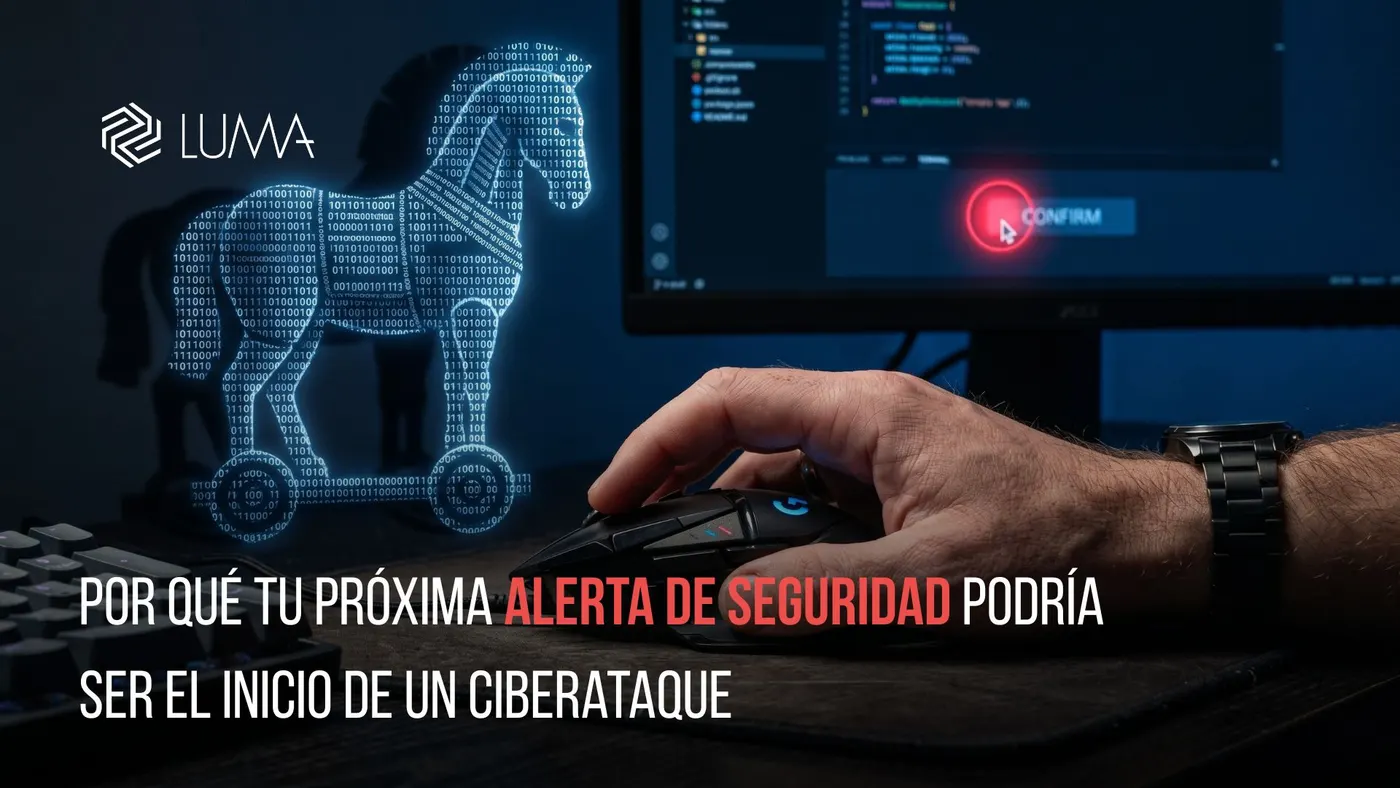
What would you do if you received an urgent email notifying you that your corporate credentials had just been leaked on the Dark Web? Most employees, driven by panic and a sense of responsibility, would immediately click the “Verify account” or “Change password” button. It is a natural human reaction. However, in 2026, that very reaction is the target of one of the most sophisticated social engineering tactics: reverse social engineering.
The trap: fear as an entry vector
Traditionally, phishing tried to trick users into winning a prize or viewing an invoice. Today, attackers disguise themselves as “saviors”. They use the names of legitimate data breach monitoring services (such as Have I Been Pwned or Microsoft and Google security alerts) to create a false sense of urgency.
The mechanism is simple but lethal:
- The notification: The user receives a (fake) notice that their data has been exposed.
- The panic: Critical thinking switches off because of the urgency.
- The action: The user clicks a “remediation” link that takes them to a mirror site designed to capture their real credentials or download an infostealer.
Beyond phishing: reverse social engineering
According to reports from ESET and the SANS Institute, this technique is especially effective because the user feels they are taking a security measure. It is not a passive attack; it is the user who “invites” the attacker into the system while trying to “secure” it.
Once the employee enters their data on the fake platform, attackers gain access to the corporate infrastructure. If the company relies solely on manual detection or isolated tools, the attacker can remain hidden for months (what is known as dwell time).
The LUMA 360 response: from doubt to autonomy
At LUMA, we know you cannot leave the security of your entire company in the hands of an employee’s accidental click. The LUMA 360 model redefines defense:
- Next-generation CyberSOC: Instead of waiting for the user to report an email, our SOC detects and neutralizes these malicious domains before they reach the inbox.
- Automatic remediation: If a user does fall into the trap, our AI detects the anomalous behavior (such as a login from an unusual location or data exfiltration) and blocks access in seconds, not hours.
- Hardened infrastructure: By hosting your data on our infrastructure, we reduce entry points and guarantee minimal latency.
Cybersecurity should not be a burden on your team; it should be an ecosystem that protects them even from their own mistakes.
Is your IT team spending hours validating alerts that could be a trap? At LUMA we eliminate the noise and ensure your business continuity with our next-generation CyberSOC.
Interested in how our automatic remediation technology can shield your company? Comment «CYBERSOC» or write to us and we will get in touch for a free assessment.
Sources:
- WeLiveSecurity (ESET): «Esa alerta de filtración de datos podría ser una trampa» (2024).
- SANS Institute: «Social Engineering Resources and Tactics».
- CISA (Cybersecurity & Infrastructure Security Agency): «Phishing Infographic and Social Engineering Defense».
.webp)
.webp)
.webp)