
The AI paradox: why the RAM shortage is once again threatening IT budgets
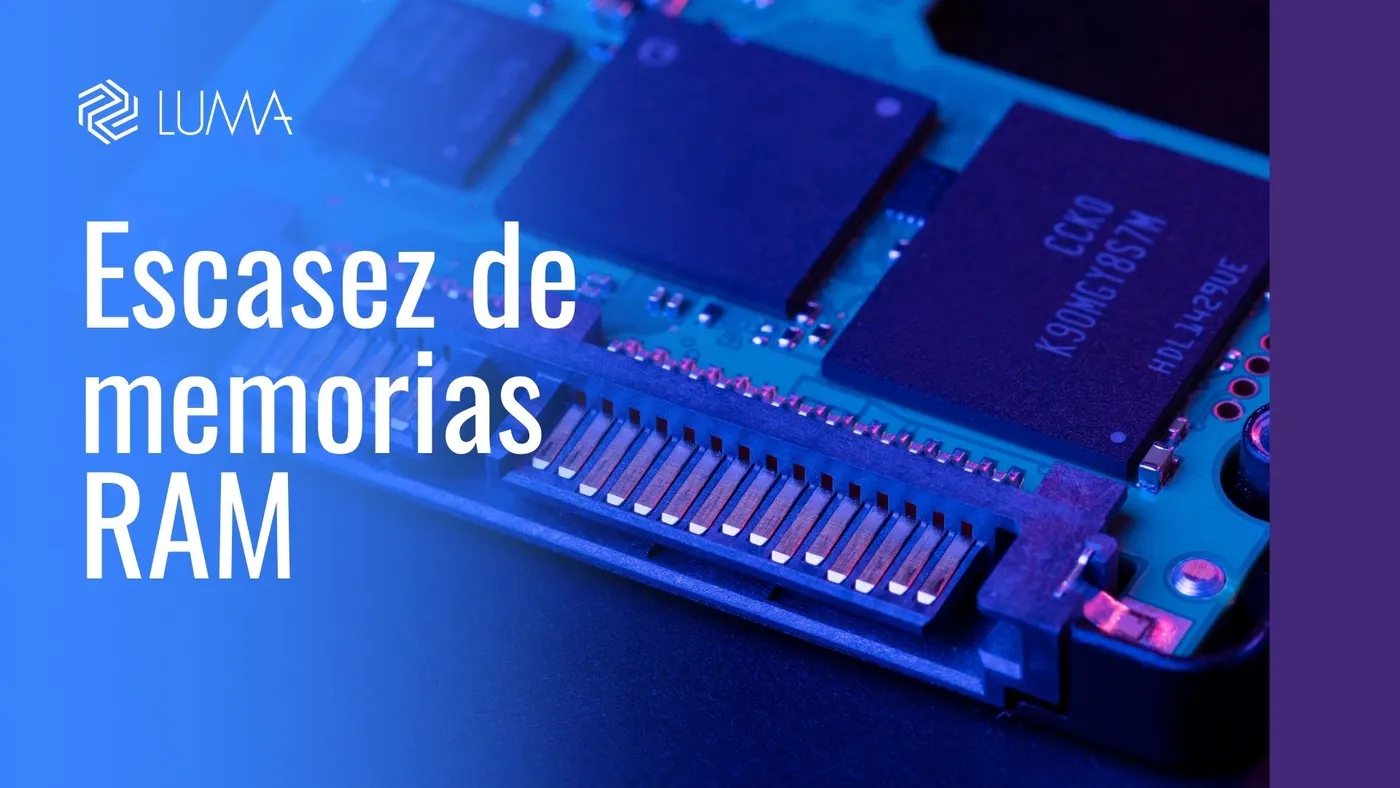
It seemed that the dark days of the supply chain were behind us. However, technology directors are now facing an old acquaintance: hardware price volatility. But this time, the cause is not a pandemic or global logistics. The culprit, ironically, is the technology everyone wants to implement: artificial intelligence.
In this analysis we explain the current RAM shortage, the rising cost of DDR5/DDR4 modules and how companies can shield themselves from this new upward cycle.
The “cannibal effect”: HBM vs. standard memory
To understand why the price of your server’s RAM is going up, we need to look at AI supercomputers. The chips that power models like GPT-4 require a special memory called HBM (High Bandwidth Memory).
The problem is physical and economic: making an HBM chip consumes up to three times more silicon wafer capacity than standard memory. Faced with explosive demand, the world’s three largest manufacturers — Samsung, SK Hynix and Micron — have made a drastic decision: convert entire conventional DRAM production lines to dedicate them exclusively to HBM. Essentially, the industry is “cannibalizing” standard memory production to feed the AI fever, reducing the supply available to the rest of the market.
What do the manufacturing giants say?
The manufacturers’ stance for 2025 and 2026 is clear: profitability over volume.
- SK Hynix recently confirmed that its production capacity for AI memory is sold out for the entire year, forcing it to prioritize that segment.
- Samsung and Micron maintain a policy of “disciplined production” for conventional memory. This means they will not flood the market with cheap chips; they will keep supply tight to sustain prices, as reported by analyst firms such as TrendForce.
Impact and solutions: how to protect your operation
For companies, this translates into an immediate increase in CAPEX and longer lead times for physical infrastructure. However, there are strategies to soften the blow:
- Migration to IaaS (Infrastructure as a Service): Instead of struggling to buy hardware at inflated prices, this is the strategic moment to rely on managed infrastructure providers such as Luma. By using elastic cloud resources, you avoid asset depreciation and the current silicon premium.
- Resource optimization: Before expanding, audit. Many companies run with “zombie” or over-provisioned resources. Reducing current consumption is the fastest way to “generate” memory without buying it.
- Early purchasing: If physical acquisition is unavoidable, abandon the Just-in-Time model. Securing stock today is more cost-effective than trying to get it next quarter.
The RAM shortage is a reminder that digital transformation has physical costs. The key is not having a bigger budget, but a more flexible architecture that does not depend on component volatility.
Need advice? Contact us today.
________________________________________________________________________________
Sources consulted:
- TrendForce: Analysis of DRAM prices and HBM capacity (trendforce.com)
- Reuters: Reports on SK Hynix’s sold-out capacity (reuters.com)
- Micron & Samsung IR: Investor call transcripts on 2025 supply strategy.
.webp)
.webp)
.webp)