
The Azure and AWS outages: the urgency of a real disaster recovery plan (DRP)

In less than ten days, the global technology industry has taken two devastating blows. First, a massive outage at Amazon Web Services (AWS). Yesterday, October 29, a “Black Wednesday” caused by a global Microsoft Azure outage.
These are not isolated incidents. They are alarm bells that expose a critical vulnerability in modern digital infrastructure: hypercentralization.
Companies such as Avianca, Colombia’s Financial Superintendence and thousands of other organizations (from airlines to banks) were affected and struggled to keep their operations afloat.
What these events show with alarming clarity is that the question is no longer whether your cloud provider will fail, but when. And, most importantly: what is your plan when that happens?
What happened, and why did Microsoft Azure fail?
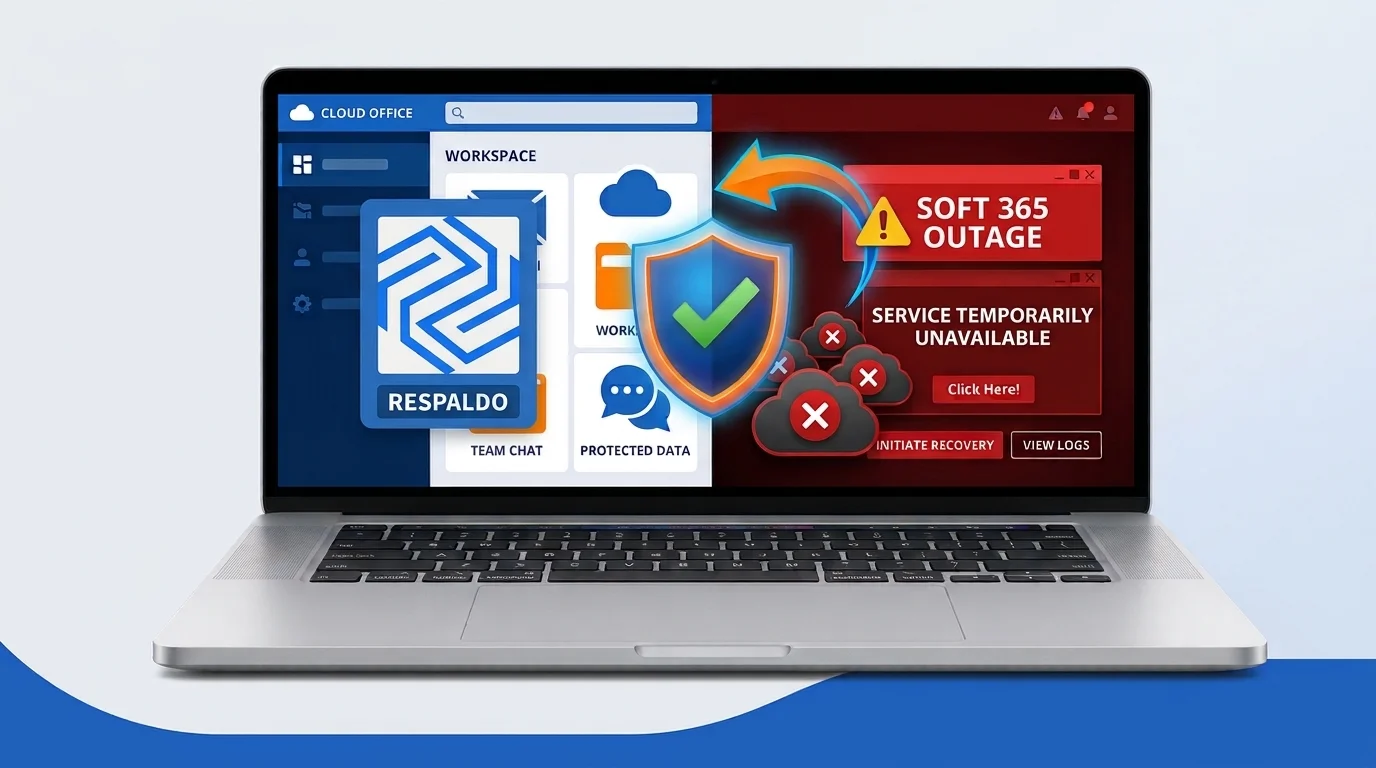
According to Microsoft’s official reports, the Azure outage was caused by an “inadvertent configuration change” in Azure Front Door (AFD), its global routing and content delivery (CDN) service. This change caused DNS failures, triggering a domino effect that paralyzed critical services such as Microsoft 365, Teams, Xbox and, crucially, the operations of thousands of companies that depend on Azure.
The fundamental problem is this: when a centralized service like AFD fails, it drags down the entire ecosystem that depends on it.
This is where most continuity strategies fail. Many companies believe they are safe because they have a Disaster Recovery Plan (DRP). However, if a company’s DRP lives in the same cloud as its main operation, there is no plan B.
The hypercentralization of clouds
Hypercentralization is a single point of failure. A configuration error, a human mistake or a cyberattack on a central service can paralyze thousands of companies at the same time.
Business resilience in 2026 is not defined by the size of your main cloud provider, but by the intelligence of your diversification strategy. The solution is not “Cloud A” or “Cloud B”. The solution is “Cloud A AND Cloud B”.
Luma Cloud: the real solution for a Disaster Recovery Plan (DRP)
An effective Disaster Recovery Plan (DRP) must, by definition, be independent of your primary infrastructure. It must be in a separate geographic location, on a separate network and, ideally, with a separate provider.
This is where Luma becomes the strategic partner for business resilience.
As a local backup cloud, we offer the independence your DRP needs to be truly effective.
- Independent infrastructure: Our cloud runs in Tier III and IV data centers in Colombia, completely separate from the infrastructure of global hyperscalers.
- Data sovereignty and low latency: Your backup is not only secure, it is close, ensuring fast recovery (low RTO/RPO) in compliance with local regulations.
- 24/7 human support: When disaster strikes, the last thing you need is a support ticket in a queue of 10,000. Our team of expert engineers in Colombia responds immediately, in your language, to execute your recovery plan.
Do not wait for the next outage: let’s talk about your DRP
At Luma, we do not just offer you a backup cloud; we offer you a complete resilience strategy. Our team can help you design and implement a robust Disaster Recovery Plan (DRP) and a CyberSOC that protects your operation, no matter where the main infrastructure fails.
Assess your real risk before it is too late.
Book your FREE personalized consultation with our business continuity experts today.
Request my free consultation https://zfrmz.com/olv9Rv1gDwypNhDPSV0b

.webp)