
The real risks of cloud security
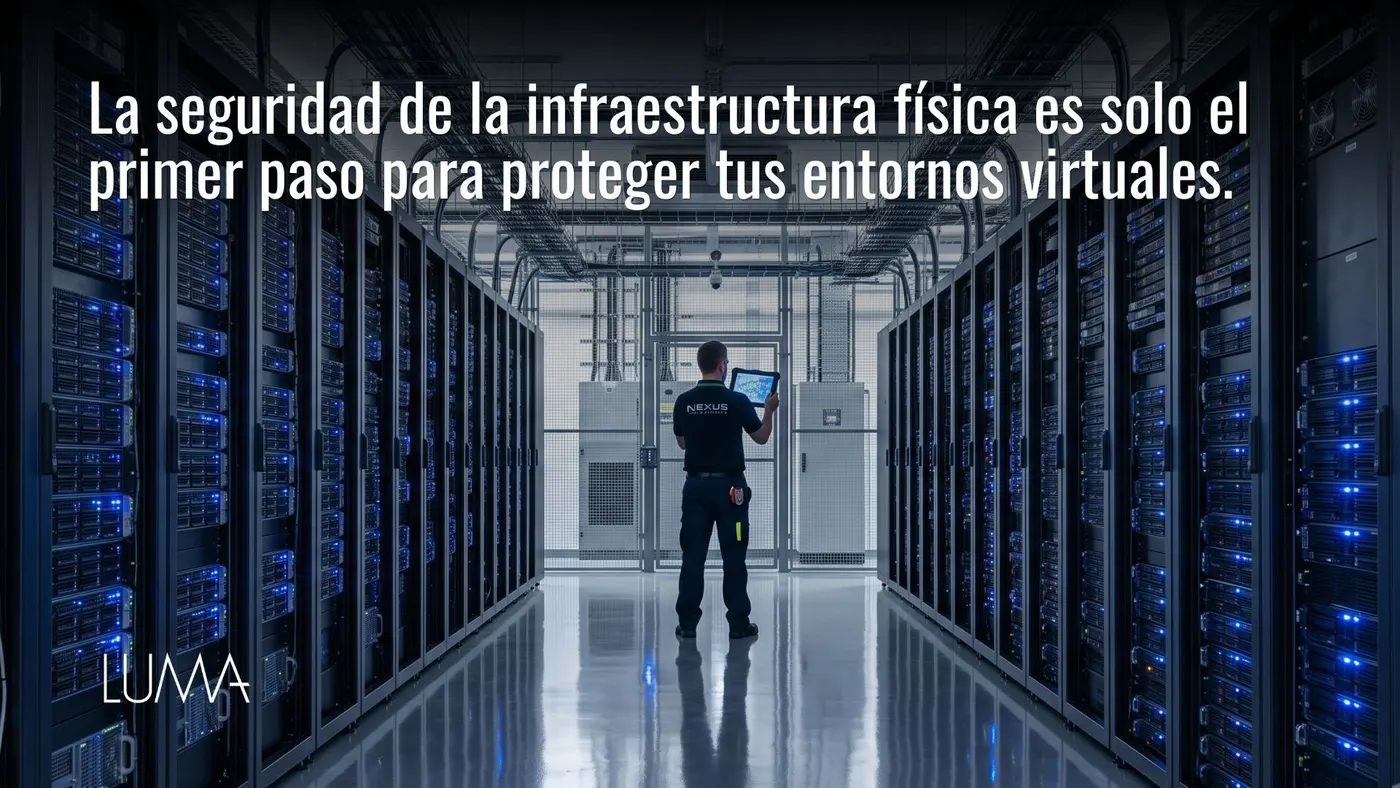
The weakest link is not always sophisticated malware, but poor internal configurations. This stems from misunderstanding the shared responsibility model:
- The provider secures the cloud: It protects the physical layer, hardware, power and basic virtualization.
- The customer secures what is in the cloud: It is fully responsible for access, data encryption and application tuning. Leaving public permissions or default keys is like leaving the doors wide open.
Visibility blind spots: Operating across multiple clouds or hybrid environments scatters the operation and makes you lose track of where the most sensitive data lives.
API vulnerabilities: If integrations between systems lack strict authentication, they become the perfect path for silently extracting databases.
2. The paradox of technological hyperdependence
Centralizing your entire digital architecture with a single massive provider exposes the business to a systemic vulnerability. When a central cluster suffers a failure, an update error or a weather event, it creates a single global point of failure that paralyzes thousands of companies at the same time.
For senior management, this means assessing security through the lens of business continuity. Not having local contingency plans, hybrid backups or multi-cloud strategies cancels out any competitive advantage when the main provider suffers an indefinite outage.
3. Credential hijacking and lateral movement
In the cloud, attackers no longer break into the network; they simply sign in with legitimate credentials obtained through spear-phishing or automated credential-stuffing attacks. Once inside an administrative account, they move laterally across assets, with two serious consequences:
- Backup destruction: They disable virtual backups before launching a ransomware attack to force payment.
- Silent cryptojacking: They use your computing power to mine cryptocurrency without authorization, leaving devastating bills.
The biggest challenge: By using valid access, criminal activity is camouflaged. Without the support of a CyberSOC and advanced tools that monitor and analyze behavioral deviations 24 hours a day, an intruder can remain invisible to traditional antivirus for months.
The key question is not whether the cloud is secure, but whether your architecture is ready to withstand attacks. Mitigating these structural risks requires diversifying technology dependence, implementing Zero Trust policies and having specialized real-time monitoring.
💬 Want to know how protected and optimized your business infrastructure is? Leave us a comment below or write to us directly. Our team of engineers is ready to give you the strategic advice your company needs to operate with complete peace of mind.
Sources
- SentinelOne: Cloud Security Risks & Vulnerabilities – Cybersecurity 101 (https://www.sentinelone.com/es/cybersecurity-101/cloud-security/cloud-security-risks/)
- The Conversation: La dependencia de proveedores tecnológicos o por qué la caída de Google nos hizo temblar (https://theconversation.com/la-dependencia-de-proveedores-tecnologicos-o-por-que-la-caida-de-google-nos-hizo-temblar-152142)
- Kaspersky Latam: Cloud Security Issues, Challenges and Preemptive Safety Resources (https://latam.kaspersky.com/resource-center/preemptive-safety/cloud-security-issues-challenges)
.webp)
.webp)
.webp)