
Stack canaries: understanding the defense against memory attacks
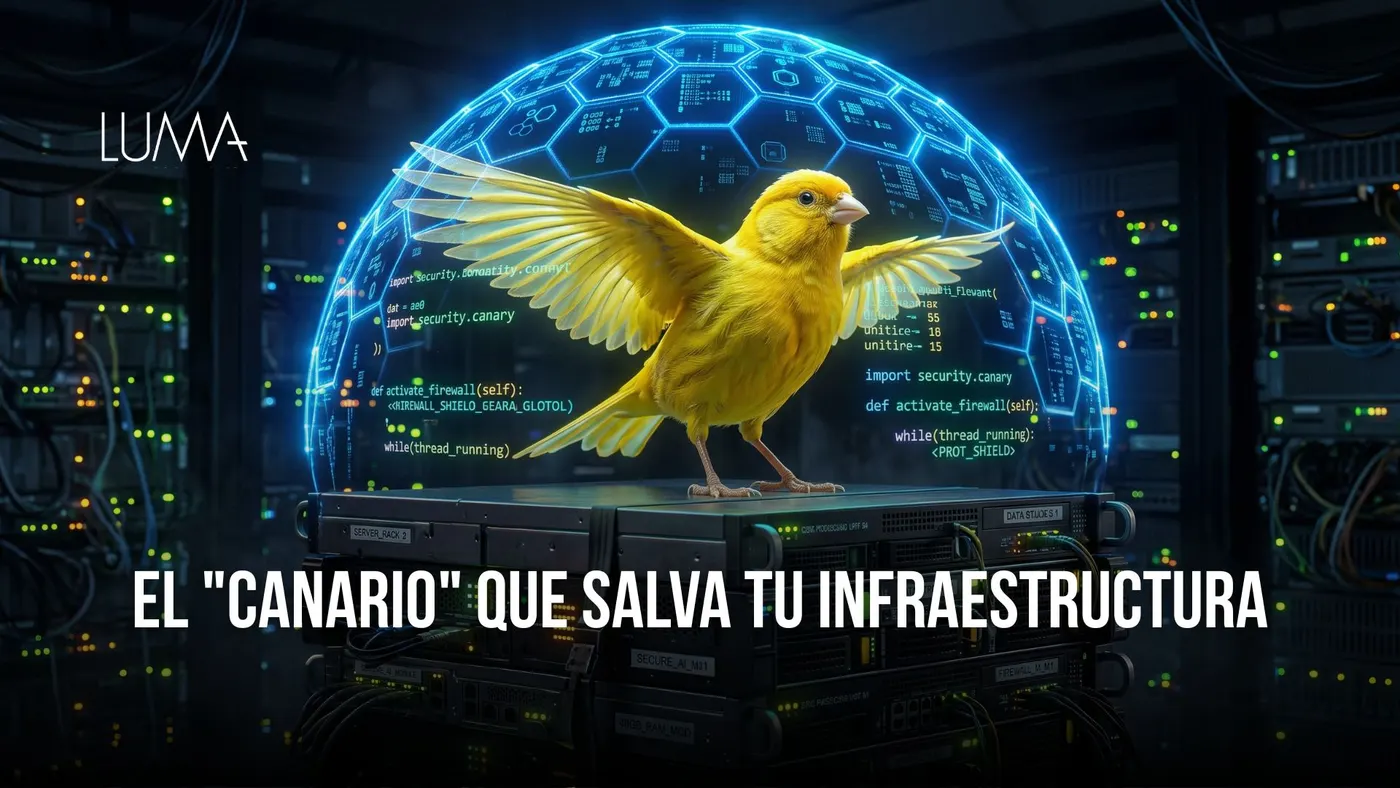
In the past, miners went deep underground accompanied by a canary in a cage. Because these birds are extremely sensitive to toxic gases, if the canary stopped singing or died, the miners knew immediately that they had to evacuate before it was too late.
In modern cybersecurity there is a mechanism that works on that same principle: stack canaries. Although it sounds like a purely technical term, it is one of the most important defensive barriers to prevent an attacker from taking full control of a critical server or application.
Today we explain in simple terms what this technique is about and why it is vital in your company’s security architecture.
What is a buffer overflow attack?
To understand the “canary”, we first need to understand the threat.
Imagine that a system’s memory (the stack) is a series of boxes where software stores temporary information (such as a username) and, right at the end, stores the instruction about where to go next.
If an application does not properly validate the size of the data it receives, an attacker can send a massive volume of arbitrary information to overflow the box (buffer overflow). By doing so, they overwrite the final instruction and replace it with their own malicious code, managing to execute unauthorized commands or take control of the server (Remote Code Execution - RCE).
How does the stack canary work?
It is a secret value placed in memory that acts as a trap: if an attacker tries to overflow the system to take control, they inevitably alter the “canary”. When the modification is detected, the program aborts execution instantly, blocking the attack before it can cause damage.
Why is it key for senior management and IT?
Memory flaws are ransomware’s favorite entry point. This mechanism shows that cybersecurity goes beyond a simple antivirus:
DevSecOps: Requires secure code and modern compilation settings.
Defense in depth: Combines software security with infrastructure protection.
24/7 CyberSOC visibility: Makes it possible to react to the alert in real time and isolate the compromised machine.
Cyber resilience is not achieved with tools alone; it requires auditing vulnerabilities, patching on time and monitoring anomalous behavior 24/7.
Does your company know the real exposure level of its applications and infrastructure?
At LUMA we help public and private organizations identify vulnerabilities before they are exploited, backed by a 24/7 CyberSOC and business continuity solutions.
If you want to assess your company’s security posture, comment the word “DIAGNÓSTICO” or send us a private message and we will arrange a free audit.
.webp)
.webp)
.webp)