Enterprise data center infrastructure: TIER III and IV levels — which does your company choose?
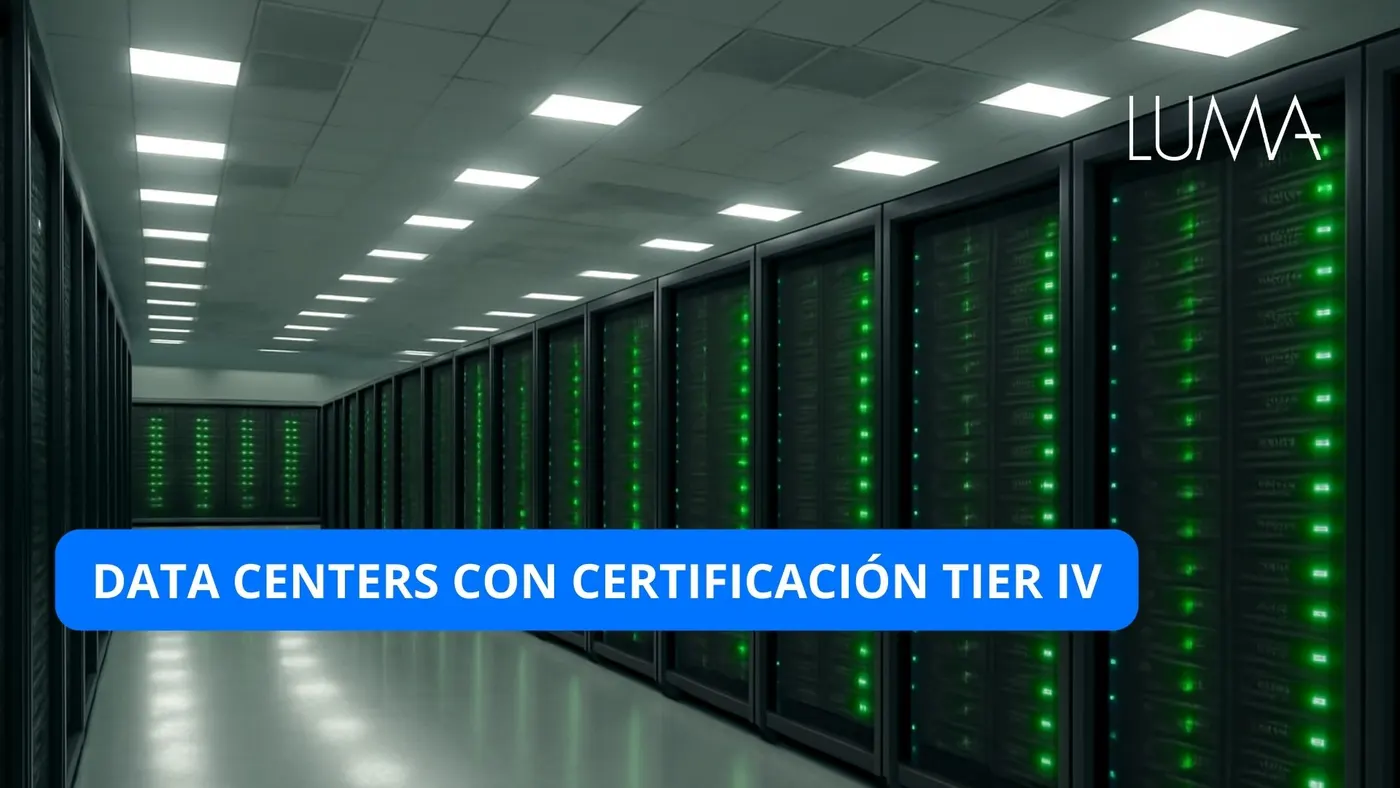
Data centers form the backbone of today’s technology, so their design and reliability are key for companies. The TIER classification is a system developed by the Uptime Institute that categorizes data centers into four levels (from Tier I to Tier IV) according to their redundancy, security and availability.
The higher the TIER level, the more complex and fault-tolerant the center. For example, a basic Tier I guarantees around 99.671% uptime (almost 28.8 hours of downtime a year), while a Tier IV reaches up to 99.995% availability. These standards (included in the ANSI/TIA-942 standard) help companies evaluate the reliability of the physical infrastructure where their data is hosted.
Availability level
TIER I: 99.671% per year = Basic infrastructure, no redundancy.
TIER II: 99.741% per year = Partial redundancy (power, cooling).
TIER III: 99.982% per year = Full redundancy and maintenance without interruptions.
TIER IV: 99.995% per year = Full fault tolerance. Everything is redundant: power, network, climate control.
What are TIER levels in a data center?
Each TIER level defines the resistance to failures and the guaranteed uptime:
TIER III – Concurrently maintainable data center
Tier III centers allow continuous maintenance without interrupting service. This is achieved through:
- N+1 redundancy in power and cooling, with dual paths.
- Concurrent maintenance: any component can be replaced while the center remains active.
- 99.982% uptime (≈1.6 hours of downtime a year).
Architecture and redundancy
- Two independent power sources, each with its own UPS and generator.
- Duplicated cooling systems.
- LumaCloud IaaS and VPS infrastructure
In short, Tier III guarantees high availability without excessive costs. It offers a very good level of performance and operational security. Tier III is usually the professional starting point to support vital workloads, since it makes it possible to scale to the next level (Tier IV) in the future without major interruptions.
TIER IV – Fault-tolerant data center
In the most demanding enterprise data center classification, a Tier IV offers:
- 2N+1 redundancy, with no single points of failure.
- 99.995% uptime (≈26 min of downtime a year).
- The ability to withstand simultaneous failures in multiple components.
Recurring use cases in business sectors
- Finance: High-frequency financial transactions
- Hospitals and healthcare: Health and emergency platforms
- Information security: Research centers with irreplaceable data
- Transportation: Large-scale national, international and continental operations
- Construction: BIM platforms (Building Information Modeling — a collaborative digital environment for a construction project), real-time project management and uninterrupted site monitoring systems.
- Manufacturing: Continuous support for automation processes, robotics, inventory control and supply chains
- Technology: Operation of cloud services, critical applications, data centers and digital platforms that require maximum availability.
Tier IV centers have maximum scalability and reliability. They connect to multiple power distribution and cooling lines, with duplicated generation and cooling systems. This guarantees continuous operation even in the face of simultaneous failures. Tier IV is recommended for large corporations that require uncompromising availability.
Benefits of Tier III and IV centers
Tier III and IV levels represent the reliability standard for critical services. Their key advantages include the ability to carry out maintenance without interruptions and offer full redundancy. In practical terms, this translates into minimizing the risk of outages that would affect customers or sensitive processes. In addition, operating in Tier III/IV centers makes it possible to meet the security regulations and quality standards required in regulated sectors.
Integrating this infrastructure with advanced services maximizes the benefit. For example, Luma Cloud combines its IaaS and VPS infrastructure with certified Tier III and IV data centers, ensuring its customers’ applications run with high availability. It also complements this infrastructure with comprehensive cyber protection and continuous monitoring measures to maintain resilience against attacks or failures. Together, operating on Tier III/IV provides the technical foundation for scalable, secure cloud services.
Luma Cloud guarantees robust, continuous infrastructure, responding to customers’ critical needs. For more information about cloud solutions and how to take advantage of the benefits of advanced Tier centers, contact us.