The controversial AWS outage that shook Latin America: how much did companies lose by depending on a single cloud?
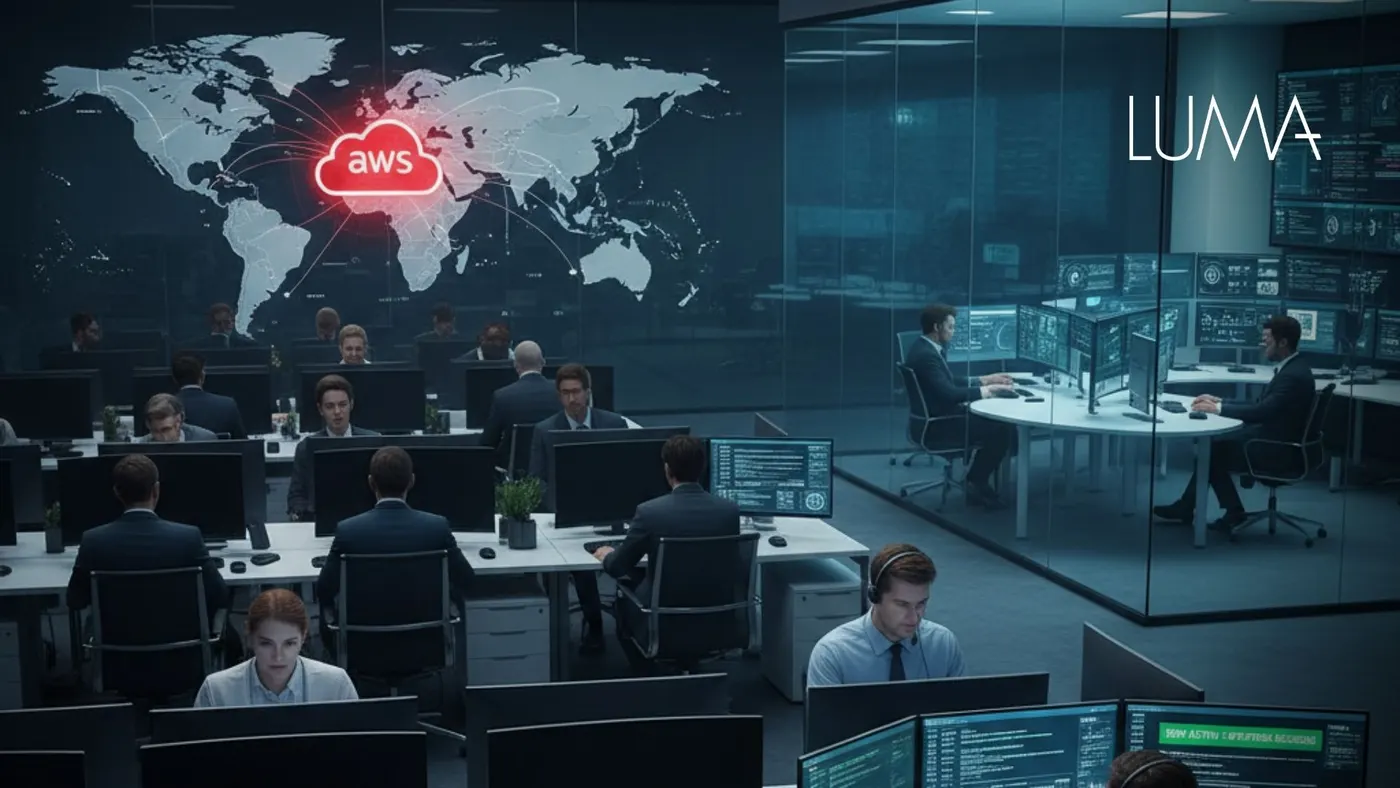
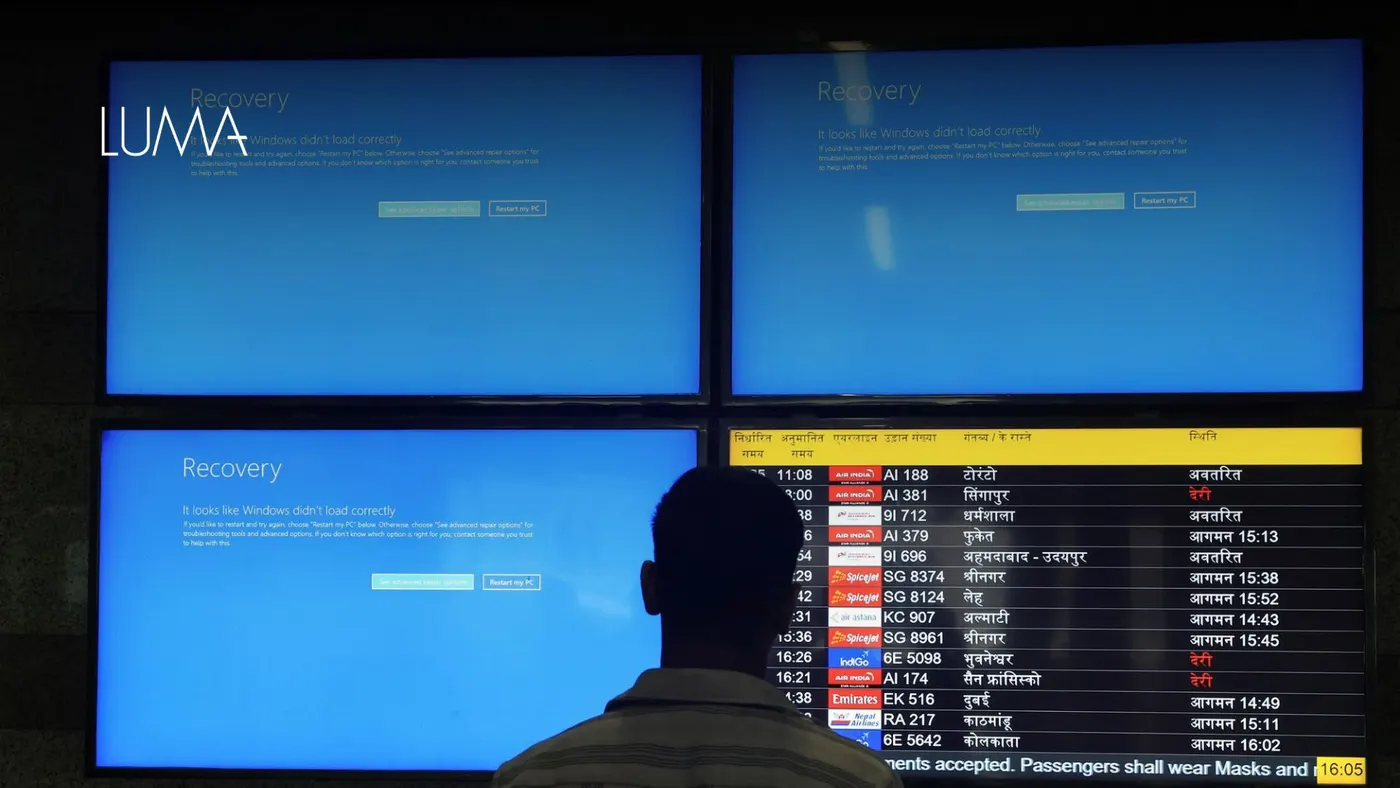
A black Monday for the Internet: On October 20, 2025, millions of users and companies woke up without access to critical digital services due to a global Amazon Web Services (AWS) outage. For about 15 hours, a massive blackout in the AWS cloud disrupted the operations of hundreds of companies — revealing how vulnerable the digital economy can be when we depend on a single cloud provider. Websites, apps and entire systems went offline, causing chaos in everyday activities and losses in the millions across multiple sectors.
Impact on affected global and Latin American companies
The list of services that went down was long. Popular platforms such as Snapchat, Reddit, Zoom, Fortnite, Duolingo, Airbnb and even the AI assistant ChatGPT suddenly stopped working. Even Amazon services such as Alexa, Prime Video and Ring were disrupted.
Most alarming for Latin America is that critical services in the region also collapsed. In Colombia, the main banks (Bancolombia, Davivienda) and the digital wallet Nequi reported that their mobile apps and web portals were down, preventing customers from making transfers or checking balances.
The domino effect also reached telecom operators, government sites, online education platforms and media outlets in the region. In short, more than 1,000 companies worldwide suffered disruptions and more than 4 million users reported cascading problems due to this AWS failure.
Why it happened: the technical cause behind the AWS outage
A key question after the chaos was: What exactly caused the AWS outage? Amazon itself stated that everything originated at its main data center in Northern Virginia, one of its largest and oldest. There, an internal technical failure triggered the blackout. According to AWS, the root cause was a problem with the internal network monitoring system (responsible for monitoring load balancers) within its EC2 service. In simple terms, it was an error in the Domain Name System (DNS): this system, which works as the Internet’s “phone book”, stopped correctly translating web addresses into numerical server identifiers.
The DNS failure prevented multiple applications from finding the address of the Amazon DynamoDB API, a key cloud database where many platforms store user information. When DynamoDB became inaccessible, other AWS services began failing in cascade, causing massive errors in any application that depended on that database.
AWS acknowledged that more than 113 of its internal services were affected at the same time. It is important to stress that it was not a cyberattack but a cascading technical failure, as an outside expert confirmed: “there are no signs of an attack, it looks like a technical failure in one of the main data centers”.
Losses in the millions: the cost of hours without cloud service
Beyond the inconvenience for users, how much did this massive outage cost companies? Analysts estimate the economic impact was enormous. According to Catchpoint (a digital monitoring firm), the global AWS outage may have caused losses close to hundreds of billions of dollars in total. Think of e-commerce brought to a halt, banking transactions not carried out, ads not displayed and logistics operations paused for hours: direct and indirect losses add up quickly.
To put the blow in perspective: every hour of downtime in a critical service translates into millions in lost revenue and productivity for the largest companies. In Colombia, for example, Bancolombia and Davivienda went several hours without offering their digital services — a period in which they would normally process thousands of their customers’ banking transactions. Although these institutions have not disclosed figures, it is clear that the disruption meant significant losses in fees, missed sales and operating costs (as well as reputational damage).
Business continuity: lessons and how to protect yourself (CyberSOC, DRP and multi-cloud)
The big lesson from the AWS outage is the importance of business continuity. No company wants to be at the mercy of a single point of failure. When we entrust our entire infrastructure to a single cloud provider, a failure like this can “switch off” the business completely from one moment to the next. Technology experts point out that this event “highlights our dependence on relatively fragile infrastructure” and that the main cause of the problem is having entrusted everything to a single service.
Many organizations are rethinking their strategy after this blackout: “the outage is likely to push customers to spread their infrastructure across several clouds”, said a Bloomberg Intelligence analyst.
For companies in Colombia, Peru and the rest of Latin America, where digital transformation is advancing by leaps and bounds, this is a wake-up call. It is crucial to have a solid, up-to-date Disaster Recovery Plan (DRP). What does this mean in practice? That your business has a protocol ready to restore systems and data quickly in the event of a serious failure, whether by switching to a backup server, another cloud region or even an alternative provider.
Unfortunately, many companies do not implement these redundant measures to save costs, and “when they cut corners and forget that last step of protecting themselves against outages, they are the ones that suffer most”.
In addition to a DRP and cloud diversification, it is advisable to strengthen a CyberSOC (Cybersecurity Operations Center). A CyberSOC monitors the company’s technology infrastructure 24/7, detecting anomalies in real time. Although in this case the problem was on AWS’s side, a well-coordinated security team can raise an early alert about the outage, activate contingency plans and make sure that, while the disruption lasts, there are no security breaches or compromised data. It will also help coordinate both internal (IT teams) and external (customers) communication during the crisis. In short, companies must take proactive measures to ensure business continuity in the face of technology disasters like this one.
Is your company prepared to face a cloud failure like AWS’s? At Luma we offer specialized CyberSOC and DRP services that will help you ensure your business’s continuity. Fill out our contact form to get personalized advice and protect your company from the next big digital challenge.
Do not wait for the next global blackout to take action!