Brand protection in cybersecurity: how a CyberSOC defends your company's identity

Brand impersonation: a growing problem
A brand’s identity is more than a logo; it represents the trust customers and partners place in a company. That is why, when a cybercriminal impersonates an organization, the damage goes beyond data loss and extends to credibility built over years.
This problem keeps growing – in the second quarter of 2025 alone, an alarming increase in fraud involving the impersonation of well-known brands was identified. In fact, tech giants such as Microsoft, Google and Apple were among the most imitated brands worldwide in phishing campaigns, with Microsoft leading with 25% of recorded attempts.
Malicious campaigns span multiple sectors: for example, an attack was recently detected that impersonated Booking.com to distribute malware targeting hotel companies.
Next-generation CyberSOC: protection beyond the perimeter
Faced with this reality, companies are turning to threat intelligence to get ahead of attacks. At Luma, we have integrated Google Threat Intelligence (GTI) into our next-generation CYBERSOC, making brand protection a key pillar of its active defense.
GTI is a Google solution that provides real-time global visibility into emerging threats, extending security beyond the organization’s traditional perimeter. Its engine operates at Google scale: it can analyze billions of signals (from devices, emails, websites, etc.) to detect attack patterns other systems might miss.
According to the official documentation, GTI offers capabilities such as:
- Massive daily monitoring: Scanning more than 300 million new files, URLs and domains a day, drawing on global sources such as Gmail, Chrome and VirusTotal.
- Lookalike domain detection: Automatic identification of suspicious domains similar to the company’s even before they are used in attacks.
- Recognition of visual imitations: Using AI to recognize logos, favicons[UG3] or color palettes that imitate the company’s brand identity, flagging attempts at visual impersonation.
- Intelligent threat classification: Analysis of the purpose of the detected elements, automatically categorizing them by intent (phishing[UG4], malicious brand use, fraud, etc.)
In other words, GTI turns these findings into actionable alerts within the CYBERSOC, making it possible to prevent malicious campaigns before they reach the company’s users, customers or employees. Thanks to this global intelligence, even unknown threats (never-before-seen attacks) can be anticipated and the response automated more effectively.
You may also be interested in: SOC: what it is and why every company needs one
Use case: a next-generation CYBERSOC stops a brand impersonation attempt
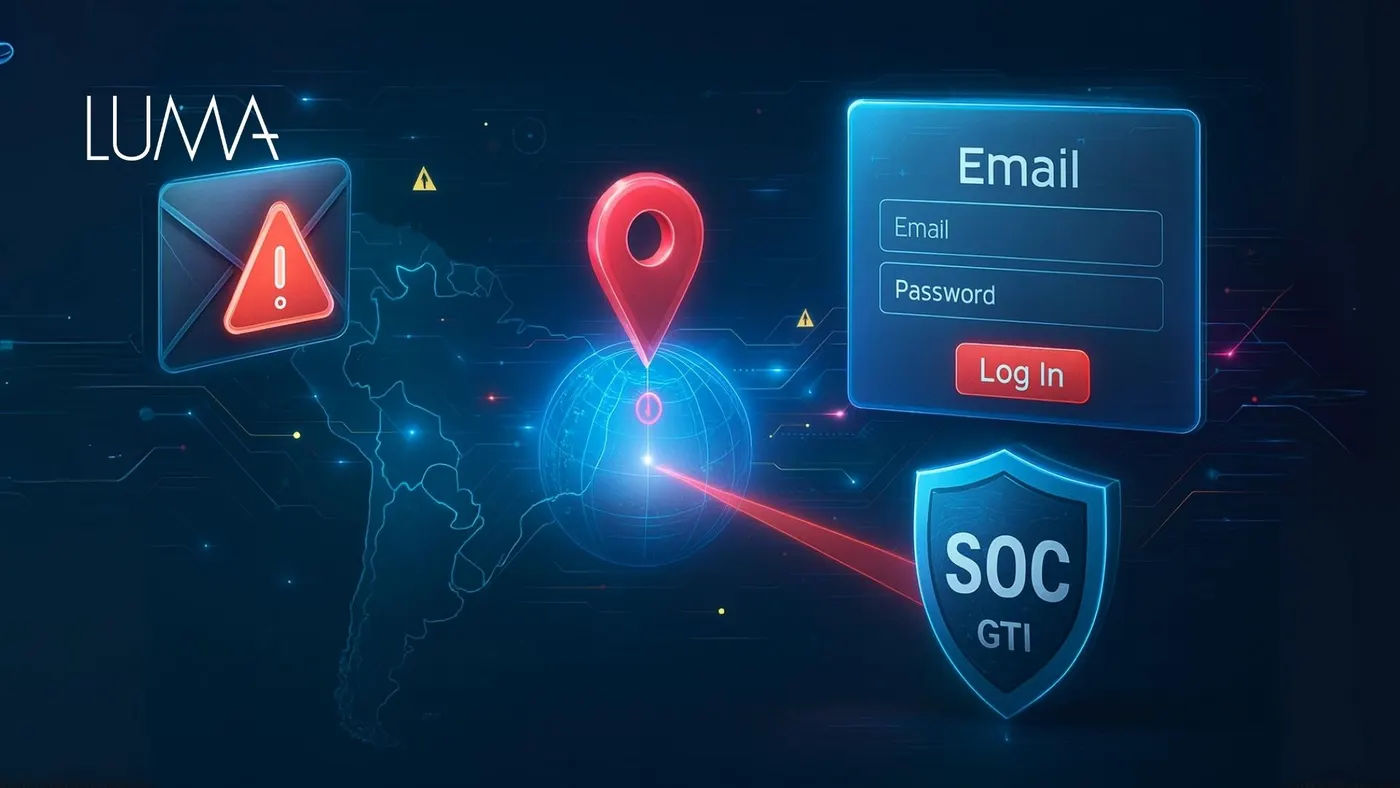
Let us imagine a realistic scenario of how this brand protection works. Using GTI, the security team detects that someone has registered a domain almost identical to the company’s (with one altered character). The cloned site has a valid SSL certificate and shows a login page visually indistinguishable from the legitimate one, hosted in a country outside the company’s jurisdiction. In this situation, GTI immediately generates an alert with key details, for example:
- A malicious URL very similar to the company’s official one.
- Evidence of visual impersonation (favicon and duplicated designs of the legitimate portal).
- Information about the hosting used, which matches infrastructure used in previous phishing campaigns targeting a similar sector.
With this data in hand before the first phishing email is sent, the security team can act immediately:
- Block access to the malicious URL in the company’s firewalls and filters.
- Notify customers or employees preventively and directly, in case any of them tried to access the fake site, to warn them of the fraud attempt.
- Start the legal takedown process to bring the fraudulent site down as soon as possible.
Thanks to this early intervention, the attack is neutralized before it is carried out. The SOC stops being a merely reactive center and becomes a real-time control tower for the digital brand.
Visibility, action and trust: brand protection as a cybersecurity strategy
Having this broad visibility and capacity for anticipatory action means the question is no longer whether someone is trying to impersonate your brand, but how many are trying right now. And with the right tools, it is possible to know the answer — and respond in real time — to keep safeguarding your customers’ trust in every interaction.
At Luma we are one step ahead: with our next-generation CyberSOC we detect these attacks before they happen. If you want to know how to implement it in your company, contact us today
.webp)